By Moaaz Manzoor
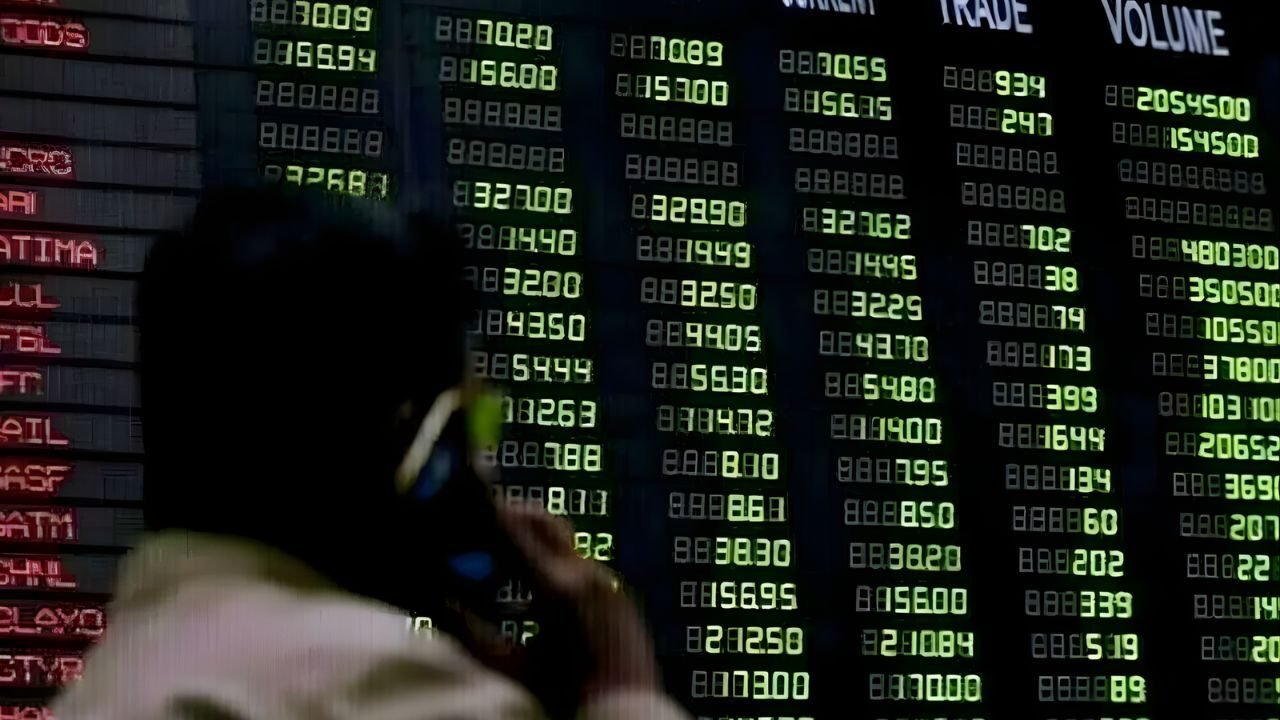
A steady week at the Pakistan Stock Exchange (PSX) brought some relief for investors, with the benchmark KSE-100 Index Pakistan climbing 408 points to close at 167,086.
This 0.24% weekly gain was fueled by external support, stable reserves, and interest in select sectors, giving the market a balanced tone, according to this reporter.
Sector Performance in KSE-100 Index Pakistan
Looking at sector trends, performance remained mixed. Cement led the rally with a 535-point gain, followed by Exploration and Production (351 points), Leather and Tanneries (168 points), Technology (77 points), and Miscellaneous (69 points).
Meanwhile, Fertilizer lost 538 points, Banks 265 points, Investment Banks 91 points, Auto Assemblers 64 points, and Chemicals 34 points.
Top Gainers and Losers
On the stock front, top contributors included Lucky Cement (260 points), Oil and Gas Development Company (206 points), Service Industries (168 points), Pakistan Petroleum Limited (155 points), and Pakistan Tobacco Company (112 points).
The biggest drags were Fauji Fertilizer Company (545 points), Meezan Bank Limited (178 points), Engro Fertilizers (106 points), Systems Limited (90 points), and United Bank Limited (80 points).
Rising Trading Activity
Trading activity picked up during the week, with average daily volumes rising 21.0% to 680 million shares. The average value traded jumped 34.6% to $143 million, reflecting focused buying in key sectors.
Investor Confidence and Currency Stability
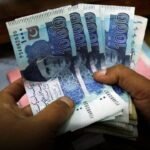
Investor confidence was further boosted by the rollover of Saudi Arabia’s $3 billion deposit with the State Bank of Pakistan until December 2026, along with stable inflation at 6.1% year-on-year in November, slightly down from 6.2% in October. The rupee inched higher by 0.04% week-on-week to PKR280.42 per dollar.
Foreign exchange reserves held by the SBP increased $14 million to $14.57 billion, while commercial bank reserves stayed steady at $5.01 billion, putting total liquid reserves at $19.59 billion.
Macroeconomic Signals and Trade Deficit
Macroeconomic signals were mixed. Pakistan’s trade deficit widened to $2.9 billion in November 2025 as exports fell to $2.4 billion, down 15.4% year-on-year and 15.8% month-on-month.
Imports rose to $5.3 billion, up 5.4% year-on-year but slightly lower on a monthly basis. Over the first five months of FY26, the cumulative trade deficit grew 37.2% year-on-year to $15.5 billion.
Commodity Markets and Debt Levels
In the commodities market, cement dispatches totaled 4.14 million tonnes in November, down 3.2% year-on-year. Urea offtake rose 25% to 817,000 tonnes, while DAP offtake dropped 14% year-on-year. Central government debt increased to PKR77.0 trillion in October 2025, a 0.5% rise from September.
Ali Najib, Deputy Head of Trading at Arif Habib Ltd, said the KSE-100 “extended its consolidation phase,” pointing out that the Saudi deposit rollover and clarity on the Chief of Defence Staff appointment helped stabilize market flows.
He added that FFC, PPL, OGDC, UBL, and SYS contributed 551 points collectively, while MCB, PIOC, FABL, NBP, and BOP reduced 138 points from the index.
Looking ahead, analysts at AKD Securities expect the index to aim for new highs ahead of the International Monetary Fund Executive Board’s decision, improved credit ratings, and anticipated foreign inflows.
They noted the KSE-100 remains attractively valued at 7.7 times earnings, with a dividend yield of 6.7%.
Author Profile

-
Moaaz Manzoor is a business correspondent who meticulously tracks Pakistan’s crucial but neglected natural resource industries.
He specializes in exposing inefficiencies and charting the course of modernization, highlighting how efforts to mechanize mining have dramatically cut marble and granite wastage, driving a recovery and attracting vital investment.