By Azeem Ahmed Khan
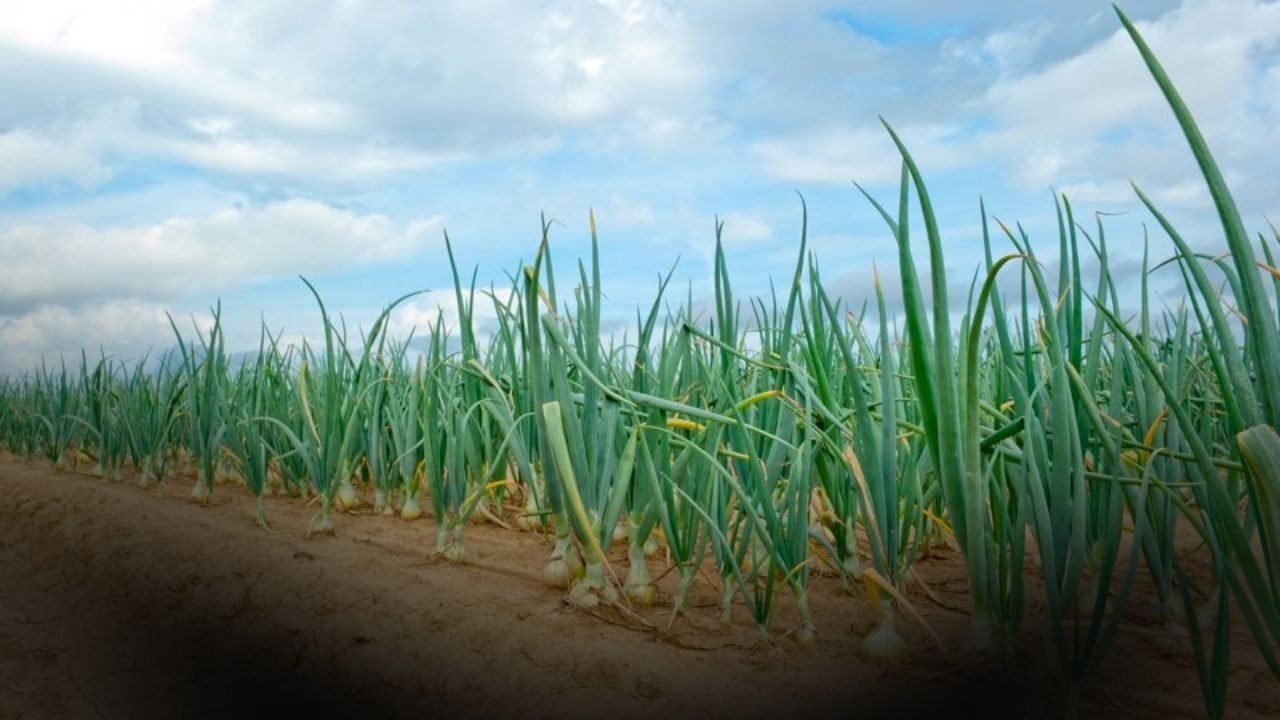
A sharp jump in Pakistan’s onion harvest has surprised even longtime growers, marking one of the most notable boosts to the country’s vegetable output this year. This rise adds fresh attention to Pakistan onion production, a topic drawing wide national interest.
Pakistan Onion Production Growth Highlights
To start, Pakistan’s onion production climbed by 19.2 percent during the 2024–25 crop year, reaching 2.747 million tons compared with 2.3046 million tons in 2023–24, this reporter reported.
Expansion of Cultivated Area in 2024–25
At the same time, the cultivated area grew noticeably. It expanded by 16.8 percent to 166,400 hectares from 142,500 hectares, showing stronger plantation activity and favorable growing conditions, according to a document from the Ministry of National Food Security and Research.
National Consumption and Crop Importance
Moving deeper, onion remains Pakistan’s second-largest vegetable crop after potato. The country eats between 1.6 and 1.8 million tons every year, with onions used in soups, sauces, seasonings, and almost all home cooking across the country.
Provincial Targets and Future Outlook
Looking ahead, Pakistan has set a higher production target of 2.78 million tons for the 2025–26 crop year. Cultivation is planned over 168,000 hectares. Sindh is expected to lead with 956,550 tons from 60,000 hectares, followed by Balochistan with 884,500 tons from 47,000 hectares.
Punjab has a target of 720,000 tons from 49,000 hectares, and Khyber Pakhtunkhwa aims for 254,400 tons from 12,000 hectares.
Provincial Breakdown of Production Trends
In another key trend, Punjab became the main engine behind the growth in 2024–25. Its production more than doubled—jumping 92.4 percent to 914,000 tons from 475,000 tons the previous year.
The province also raised its cultivated area sharply, increasing from 29,000 hectares to 52,000 hectares, a rise of 79.3 percent. This pushed yield upward by 7.3 percent, from 16,379 kg per hectare to 17,577 kg per hectare.
On the other hand, Sindh, a longstanding onion powerhouse, showed smaller changes. Its production rose by 1.5 percent to 783,200 tons, while the cultivation area increased 1.4 percent to 57,900 hectares. Yield stayed nearly the same, slipping only 0.1 percent to 13,527 kg per hectare.
Meanwhile, Balochistan posted a 3.9 percent production gain, reaching 885,400 tons. The province also expanded its cultivated area by 3.7 percent to 47,100 hectares, and its yield inched up by 0.1 percent to 18,798 kg per hectare.
In contrast, Khyber Pakhtunkhwa recorded setbacks. Its cultivated area dropped 14.5 percent to 9,400 hectares and production fell 19.9 percent to 164,500 tons. Yield also declined 6.2 percent to 17,500 kg per hectare.
At the broader national scale, the average yield reached 16,509 kg per hectare, a small rise of 2.1 percent from 16,172 kg in 2023–24.
National Targets Surpassed Successfully
In a major confirmation, the Federal Committee on Agriculture reported that the national production target for 2024–25 had been exceeded.
Against a target of 2.554 million tons from 157,000 hectares, actual production reached 2.747 million tons—7.5 percent above the goal—while the cultivated area expanded to 166,400 hectares, 6 percent more than planned.
Finally, Punjab and Balochistan were the only provinces to surpass their individual production targets. Punjab crossed its 660,000-ton target by 38.5 percent, while Balochistan beat its 741,000-ton target by 19.5 percent.
Sindh missed its 911,000-ton target by 14 percent, and Khyber Pakhtunkhwa fell 32.1 percent short, producing 164,500 tons against a target of 242,300 tons.
Author Profile

-
Azeem Ahmed is an Islamabad-based journalist specializing in agriculture, business, and economic trends.
He provides insightful analysis on market developments and policy impacts shaping Pakistan’s economy.