By Ayesha Saba
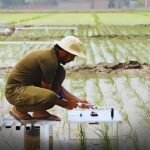
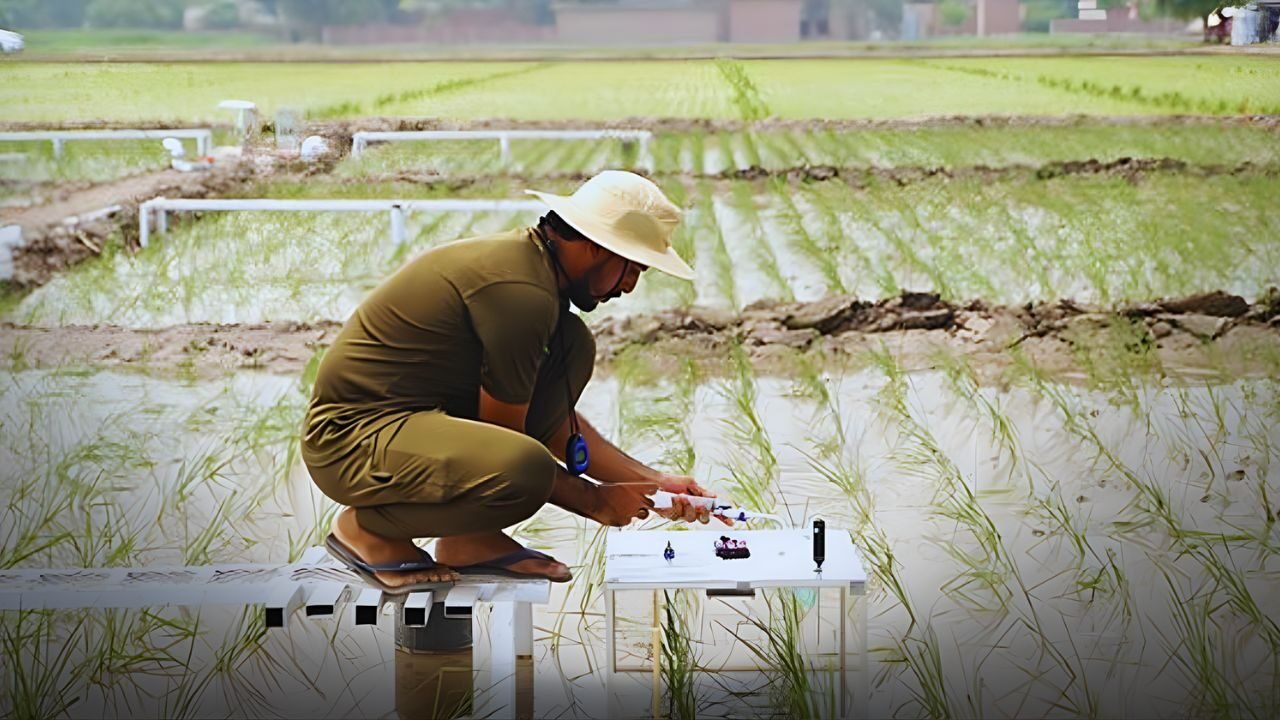
In a striking start, Pakistan rice research is achieving major breakthroughs in high-yield, climate-resilient, and export-quality rice varieties through national programs and collaboration with China.
Expansion of Rice Research Institute Activities
To build on this, a document from the Ministry of National Food Security and Research, also available with this reporter, explains that the Rice Research Institute (RRI) in Kala Shah Kaku, operating under the Punjab government, is preparing to expand its role by improving its connection with the private sector.
Speed Breeding and Hybrid Rice Development
To add more detail, the institute has set up a speed breeding facility to fast-track varietal development and has begun capacity-building efforts for scientists.
It has also joined the International Rice Research Institute’s (IRRI’s) Two-Line Hybrid Rice Study Group to advance the development and use of high-yielding, climate-resilient two-line hybrid rice technology.
Funding and Resource Mobilisation
Moving ahead, RRI has submitted a proposal worth Rs112 million to the Export Development Fund to help strengthen resource mobilisation, the document states.
Nationwide Farmer Outreach and Demonstration Plots
As the record continues, under the Productivity Enhancement of Rice Project (2019–2025), major progress has been noted. This includes the acquisition of 945 germplasm lines from China and IRRI to improve the breeding base, the development of 14 new rice varieties, and extensive farmer outreach that included more than 450 field days and training sessions.
Along with this, 1,553 units of rice machinery have been distributed to farming communities, and 3,885 tons of certified seed have been provided to support higher yields and better production practices.
In the same direction, 2,493 demonstration plots have been created nationwide to promote good agricultural practices, direct-seeded rice, and mechanical transplanting, helping farmers move toward modern and more efficient techniques.
Technological Milestones in Rice Breeding
Adding another important step, under the Sino-Pak Agricultural Breeding Innovations Project for Rapid Yield Enhancement (2020–2025), Pakistan has established its first Intelligent Glass House and an IoT-based smart facility for speed breeding, marking a major technological milestone.
To continue the progress, the start of genome-based speed breeding, supported by a world-class Next Generation Sequencing Facility at the National Agricultural Research Centre, has enabled faster development of climate-resilient and high-yield rice varieties.
Germplasm acquired from China, including TGMS (thermosensitive genic male sterile) lines, is helping advance hybrid rice development, the document adds.
Budget and Future Rice Development Projects
To further explain, the ministry’s document also highlights other projects. The “Productivity Enhancement of Rice” project (2020–25) is a major PSDP initiative with a total allocation of Rs15,789 million.
Of that amount, Rs3,750 million was allocated under PSDP, with Rs1,432 million released so far and expenditures recorded at Rs1,424 million.
Additionally, Rs611 million have been allocated to the Sino-Pak Breeding Innovations Project (2020–25), while the Fertilize Right Pakistan programme—under the International Centre for Agricultural Research in the Dry Areas—aimed at improving fertilizer-use efficiency, is being carried out with total funding of $282 million. The programme will run from 2024 to 2027.
Author Profile

-
Ayesha Saba is an economic journalist advocating for Pakistan's shift from unstable farming to high-value sectors.
Her sharp analysis of the central bank's report spotlights tourism and technology as vital engines for job creation and resilience, urging urgent policy pivots toward a **diverse and sustainable future.